Posts

Showing posts with the label mouth cancer

Floor of the mouth cancer: Diagnosis, Metastasize, Treatments and Signs

Image
How is cancer of the floor of the mouth diagnosed? The doctor will look at and feel the tumor. He will take xrays and do a biopsy to confirm the diagnosis. Does cancer of the floor of the mouth metastasize? Yes. This is one of the oral cancers which metastasizes to the lymph nodes in the neck in a good number of patients. What treatment is used for cancer of the floor of the mouth? In early stage cancers, the treatment is usually radiation or surgery. Cancers that are more advanced are usually treated with surgery followed by radiation and sometimes chemotherapy. How the disease progresses cannot be predicted. This depends, among other things, on how fast and aggressively the cancer grows and how big it is. Small, localized tumors can either be operated on or irradiated by doctors. With more advanced cancer, the operation is often supplemented with radiation or radiation chemotherapy. The treatment also depends on the personal needs and the physical condition of the perso...

Cheek Cancer Metastasize: Symptoms, Risky Peoples, Diagnosis and Treatment

Image
Who is at high risk for cancer of the cheek? Cancer of the inside of the cheek (sometimes referred to by doctors as buccal mucosa) occurs more often in males over the age of 55. It is believed that persons who chew tobacco and betel nuts or who bite their cheeks are at a higher risk of getting cancer of the cheek. What are the symptoms? The symptoms include a sore inside the cheek which does not heal, bloody saliva, and white patches inside the cheek. There is usually no pain. Does cancer of the cheek metastasize? Cancer of the cheek is usually slow growing. It also has a relatively low rate of metastasis. How is cancer of the cheek diagnosed? It is diagnosed by direct inspection and feeling by the doctor. Final diagnosis is by biopsy. How is cancer of the cheek treated? Early stages ofcancer ofthe cheek are treated with radiation or by surgery. Advanced cancer of the cheek is treated by surgery, followed by radiation and sometimes chemotherapy.

Oral(Mouth) Cancer: Symptoms, Bleeding, Treatment and Diagnose

Image
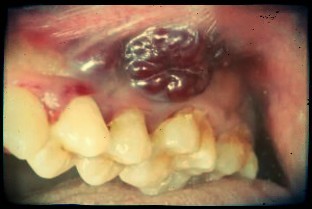
What kinds of cancers are found in the mouth? The cancers of the mouth (oral cavity) include the lip, tongue, floor of the mouth, cheeks (buccal mucosa), and gums (gingivae). Who is at high risk to get cancer of the mouth? This cancer is predominantly found in men between the ages of 60 and 70. People who are heavy smokers (more than a pack a day), drink alcohol heavily, are over 45, and have a family history of this kind of cancer are at a higher risk to develop cancers of the oral cavity, the mouth, and the throat. Is cancer of the mouth easy to detect? Yes, it is usually discovered early, since it can be seen easily. White patches ( leukoplakia ), velvety red spots (erythroplasia), or dark patches are symptoms which should be seen by a doctor, who will do a biopsy of them. Many cancers of the mouth are first discovered by dentists. What are the symptoms of oral cancer? The warning signs of oral cancer are as follows: • A lump in the cheek that can be felt with the ...

Common Dental Questions answered by Dr. S.N White

Image
Hippocrates , the father of modern medicine, recorded a collection of facts about the elderly and old age. Among them was the idea that older persons need to consume less food to be healthy. Having fewer teeth, of course, is not necessarily a dividend in that respect for those who lose their teeth through age. Dr. S.N White explains the attention and care for the special patient whose changing biological structure is quite different from that of the younger patient, requiring a particular expertise and consideration for dental problems peculiar to the later years. Q. In what ways are teeth different when we get older?  A. Teeth do change as we age. Older people have different problems in keeping their teeth and mouths healthy than do younger people. The older you are, the more likely it is that you will suffer from advanced periodontal disease, root caries, tooth wear, shrinking jawbones, and even cancer of the mouth. A good general dentist who combines modern technology with ...