Posts

Showing posts with the label leukoplakia

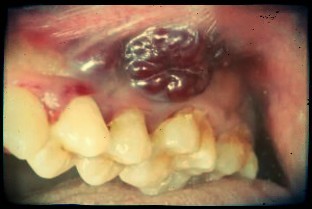
Oral(Mouth) Cancer: Symptoms, Bleeding, Treatment and Diagnose
Image
What kinds of cancers are found in the mouth? The cancers of the mouth (oral cavity) include the lip, tongue, floor of the mouth, cheeks (buccal mucosa), and gums (gingivae). Who is at high risk to get cancer of the mouth? This cancer is predominantly found in men between the ages of 60 and 70. People who are heavy smokers (more than a pack a day), drink alcohol heavily, are over 45, and have a family history of this kind of cancer are at a higher risk to develop cancers of the oral cavity, the mouth, and the throat. Is cancer of the mouth easy to detect? Yes, it is usually discovered early, since it can be seen easily. White patches ( leukoplakia ), velvety red spots (erythroplasia), or dark patches are symptoms which should be seen by a doctor, who will do a biopsy of them. Many cancers of the mouth are first discovered by dentists. What are the symptoms of oral cancer? The warning signs of oral cancer are as follows: • A lump in the cheek that can be felt with the ...

What are non cancerous skin diseases

Image
What are the major things I should be checking?  You might notice a pimple or a small sore that hasn't healed or disappeared but instead is gradually growing bigger. Or you may have had a skin lesion for many years which has started to grow or become irritated. As noted before, any pale, waxy, pearly looking lump which eventually becomes an open sore or any red, scaly, sharply outlined patches should be seen by a doctor. Moles which change in appearance or size are especially important to watch. Go to the doctor at once if any red, white, or particularly blue specks appear in a long standing mole. Moles that are a uniform bluish black, bluish gray, or of uneven surface also should be looked at by a doctor. If the mole begins to bleed, becomes darker in color, or has other tiny dark spots appearing in the skin around it, it may have become a malignant melanoma a condition which will be discussed later in this chapter. You should remember that any sore, blister, patch, pimple, or...