Posts

Showing posts with the label injury

How is abdominal trauma treated?

Image
An Abdominal Injury Patients who have suffered accidental injuries are usually seen in the emergency room of a hospital. The presence of broken bones , skin injuries and injuries to the rib cage are usually obvious or immediately diagnosable by X ray. Injuries to the head and the abdomen are more difficult to evaluate. The latter are evaluated by direct examination and feel. Usually, if the abdominally injured patient can be brought to the hospital alive and alert, it is possible to save him. The patient who is dead on arrival probably never stood a chance. Massive bleeding usually occurs from the solid organs , like the liver and spleen, and bacterial peritonitis from the intestinal tract; both areas can be injured by the same incident. Why do you ask in such detail about how it happened?  Sometimes information about the patient's position, what he was doing, and the direction of the injuring force offers clues as to what may be happening inside. For example, a child who h...

Common Hand Injuries: Treatment for swollen hand due to injury

Image
Hand Injuries Most of us earn our living with our hands. The goal of the treatment of hand injuries is maximum preservation of function. In terms of possible permanent disability, there is no minor surgery in this area. The magnitude of the problem is apparent in the frequency with which it appears in the statistics of the Workmen's Compensation Board and insurance companies. The best treatment is prevention. One must be constantly alert to the possibility of punctures, door slams, burns, pressure injuries, and the perverse potential of certain mechanical tools. Failing this, early treatment to prevent infection is best. There are relatively clearly defined methods of managing various types of injury. The patient can describe the site of the injury by indicating its relation to the various creases in the palm or to the knuckles and nails on the back of the hand. Physicians can treat all hand and finger injuries under some form of nerve blocking anesthesia, so the patient feels...

How is a broken or cracked rib treated?

Image
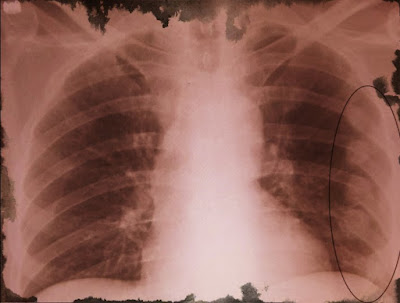
Chest Injuries The chest consists of the bony thorax and the organs that lie within it. The thorax comprises twelve ribs on each side of the chest, each of which attaches to the bony spine in the back and to the chest bone ( sternum ) in front. Each chest cavity has a smooth delicate lining ( pleura ) within which the lung rhythmically expands and deflates. The diaphragm is the dome shaped muscle that seals off the lower end of the chest from the abdomen. Its upand down motion provides the bellows action for the expansion of the lungs that fills them with air. The function of the lungs is to provide ventilation. Air is moved in to provide oxygen, and carbon dioxide is moved out as a waste product. The heart is in its own envelope in the center of the chest, behind the breastbone. The heart functions solely as a pump. It circulates the blood into the lung for oxygenation and delivers oxygenated blood to the entire body. The chest also harbors the large blood vessels and the br...

What is the symptoms of a head concussion? Is concussion a brain injury?

Image
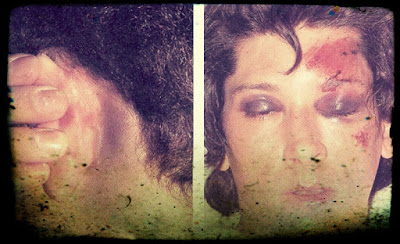
Head Injuries The brain is man's most vital possession. Recent details about organ transplants have centered on the definition of death. These discussions have emphasized that, even though the heart may continue to beat, the individual is considered dead if there is no brain activity. Nature provides a thick scalp and skull to protect the brain and further encloses it in envelopes called the meninges. Some injuries to the head may be trivial, others may be fatal. The surgeon who is called upon to evaluate the patient with a head injury tackles the problem from within out. Damage to the brain and its envelope is most important; injury to the skull is of concern in only some instances. Bleeding from the scalp is the most apparent manifestation of injury but is the least important. Survival and the late effects of a head injury depend on the extent of the injury to the brain and not to its coverings. The best possible supportive medical crre is provided to those who will reco...